

Main trends in the iron ore raw materials market in September 2025
In September 2025, the global iron ore market showed stability with price fluctuations due to the accumulation of mixed factors. Chinese buyers stepped up purchases in an effort to replenish stocks before the National Day holiday. However, supply disruptions and adverse weather conditions have created new challenges for the world’s largest steel market. Due to contract disputes, some Chinese steelmakers were forced to suspend purchases, which raised concerns about supply. Typhoon Ragasa also slowed construction activities in southern China. Forecasts indicate that after the holiday period in October ends and the weather improves, demand is likely to recover.
 Iron ore and steel prices have been volatile due to a combination of holiday stockpiling, contract disputes and volatile demand. Coking coal and rebar prices have increased, although steel mills are facing margin pressure. The current adjustment in iron ore prices is due to the gradual build-up of a supply-demand imbalance that has persisted since 2024.
The expansion of production by major miners is outpacing global consumption growth, putting continued downward pressure on prices. Recent data shows that production in Australia and Brazil has grown by around 7% year-on-year, while demand growth has remained relatively flat. New projects in Guinea have further exacerbated the supply situation, as initial production has exceeded market expectations.
China’s port stocks were high. According to the latest data, the reserves at China’s 34 major ports exceeded 130 million tons of iron ore. Shipments from Australia and Brazil remain strong, while supplies from smaller players in the market are weak. Environmental regulations have further constrained steel production in China. Stricter emission standards have imposed production limits on mills that do not meet updated pollution control standards.
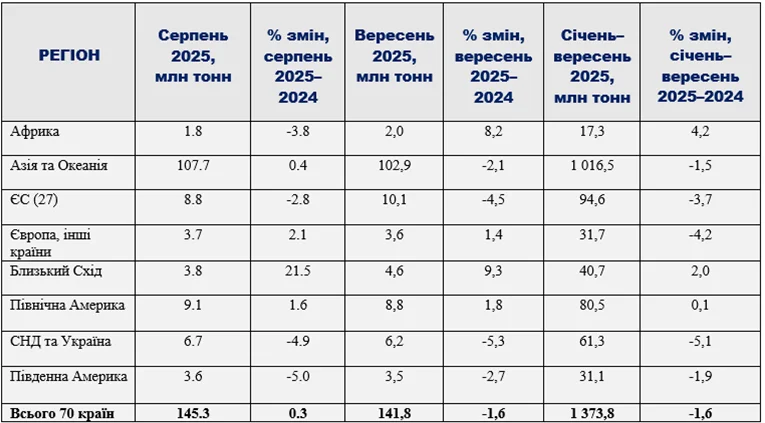
In recent months, the average capacity utilization rate of steel mills in major regions in China has been between 76% and 80%, according to trade publications. This is significantly lower than the 85-90% achieved in the previous period when ore prices were higher. Such a limited operating environment has forced steelmakers to be more cautious in purchasing raw materials, putting downward pressure on iron ore prices. China’s steel production fell by 0.7% in August, while global crude steel production grew by only 0.3%.
Iron ore freight rates are also forecast to remain stable in the near term, supported by robust shipments from Western Australia. Brazil-China routes could also see increased supply, but growth could be limited by uneven Chinese demand. Overall, the market remains stable but range-bound due to uncertainty over steel demand in China.